 Carinsider
Dacia's New Spring Grows Up Without Growing Expensive
EVs·November 13, 2026
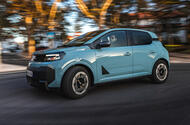
Dacia's electric Spring has been a budget favourite since 2021, with more than 210,000 sold. The second generation keeps the same low-cost pitch but comes with a bigger body and a new underpinning. It was developed in under two years alongside the Renault Twingo and Nissan Pixo by a team that gathered in Shanghai, and it will be built in Slovenia with its Renault Group siblings. That keeps it clear of the EU tariffs that hit the outgoing car, although building it costs more.
The biggest change is the platform. The Spring now rides on Renault Group's RG-EV architecture for small cars. It measures 3855mm long and 1722mm wide with a 2492mm wheelbase, so it has grown in every direction except height. The old car felt spindly; this one feels planted. Front shoulder room rises from 117cm to 139cm and rear shoulder room from 114cm to 132cm. Rear legroom improves less, from 64cm to 68cm, because the back seats are fixed rather than sliding, and the designers prioritised boot space. The boot now holds 337 litres including underfloor storage.
Inside, the dashboard is nearly identical to the Twingo's, though it is finished in plainer hard plastic without the Twingo's bright colours. The entry trim has no central screen. Higher trims get a 10.1in touchscreen, but without the integrated Google services found in Renault models. Dacia has kept physical dials for the ventilation and the handy My Safety button for switching off driver assistance systems.
Under the skin, the battery is a lithium-iron-phosphate pack with 27.5kWh usable. The claimed WLTP range is 155 miles, eight miles short of the Twingo, which the reviewer puts down to extra weight and a less slippery shape (0.318 drag coefficient against 0.295). The motor produces 80bhp and 203lb ft, enough for 0-62mph in 12.1 seconds and a top speed of 81mph. The brake-by-wire pedal feels more natural than you would expect at this price, though off-throttle regeneration offers little adjustment, and even the stronger B mode stops short of one-pedal driving. The steering is slower than the Twingo's, and the car runs 16in wheels rather than 18s, which gives a more absorbent ride.
UK pricing is not yet confirmed because the government EV grant is still undecided. Dacia is hoping for the full £3,750, which would put the Spring at an estimated £13,500. That is roughly £1,500 more than the current car's £11,990, and about £1,700 less than the Twingo based on European pricing. Real-world range of around 120 miles means it is best suited as a second car. Even so, it offers a modern EV with decent handling and far more room for not much more money.
Reporting based on an external source.