 Carinsider
Volkswagen's EV Sales Race Ahead of Its Profits
Industry·November 11, 2026
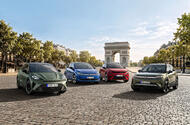
Volkswagen Group has a problem that most carmakers would welcome. Electric vehicles made up about 40% of its vehicle orders through the end of September, according to its third-quarter earnings call. In Europe, battery-electric models have accounted for roughly a quarter of registrations so far this year. The group had only expected to reach the 40% mark around 2029, so the shift has arrived years early.
Chief financial officer Arno Antlitz credited the Iran war and the fuel price spike that followed. Drivers have been moving to electric cars faster than the company or its forecasters expected. Much of that demand is centered on a new family of small, affordable EVs: the Cupra Raval, Skoda Epiq, VW ID Polo and VW ID Cross. Together, those models have already drawn around 150,000 orders.
The catch is profit. At the moment, Volkswagen makes less money on each electric car than on a comparable combustion model. Antlitz described the effect as "margin-dilutive." In plain terms, the faster buyers shift toward EVs, the more the company's margins take a hit, because the cost cuts that would offset the change are arriving more slowly than the sales. "The ramp-up of our BEV share is much faster than the ramp-down of the costs," he said.
The new small cars are a step up from earlier Volkswagen EVs such as the ID 3, but they are not yet profitable enough. The ID Cross reportedly earns 70 to 80 percent of the margin on its petrol equivalent, the T-Cross. The cheaper ID Polo lags further behind. Volkswagen is working on cheaper production, including plans to build lower-cost lithium iron phosphate batteries in Europe, but changes of that kind take time at a company of this size.
The longer-term fix depends on the SSP, a cost-focused electric platform that was meant to underpin the 2029 targets. Development is ongoing, but the gap between demand and cost reduction has grown. The timing problem is made harder by weaker sales in China, which leaves less room to absorb thin margins on the cars selling best at home.
Demand suggests Volkswagen can still hold its own against Chinese rivals and newer European competitors. The harder job is making these cars cheap enough to build that the sales boom starts to help the bottom line. Investors will be watching for evidence of that progress.
Reporting based on an external source.