 Carinsider
Tesla's Second-Generation Roadster Arrives With Thrusters That Can Lift It Off the Ground
Electric Cars·October 16, 2026
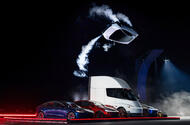
Nearly nine years after it was first announced, Tesla has finally shown the second-generation Roadster, and it is not the car many people were expecting. The company says none of the original tri-motor hypercar concept carried over. The headline change is that the new model can leave the ground. Optional cold-gas thrusters come in two packages, and the more expensive one is designed to push the car into the air.
The cheaper of the two thruster options, called Thrust, uses the jets to boost forward acceleration. Tesla quotes a 0-60mph time of 0.81 seconds, measured after a one-foot rollout. The Rocket package goes further and adds upward lift. Tesla says that version is not approved for road use. During the launch, a Roadster lifted off, cleared the cab of a Semi truck, rolled in mid-air and came down on its wheels. Tesla has not said how long the car can stay airborne, or whether it can hover for extended periods or only perform short manoeuvres.
Other features are less dramatic but still unusual. A fan pulls the car toward the road to improve grip, a approach similar to the McMurtry Spéirling. The rear wing is active and adjusts its angle to suit each driving situation. Musk claims a top speed of 230mph and also says the car should be able to reach at least half the speed of sound, around 383mph, so the final figures are clearly still under review. The body is built from magnesium, titanium and carbon fibre, and the car keeps Tesla's skateboard layout with an underfloor battery. The standard version has two rear motors. Unconfirmed reports put combined output above 1,500bhp. Steering, braking and acceleration are all by-wire, and the steering wheel is a yoke.
Pricing has only partly been announced. The standard Performance model, which lacks thrusters, requires a £50,000 deposit. The Thrust version needs £250,000, a gap large enough to make it feel like a separate car. The flying Rocket model will be available by invitation only, and Tesla has not said how many will be built or what they will cost. Musk said production begins in 2028, adding that this time he meant it, given how often the car has slipped. The launch took place at SpaceX's rocket development and test facility in Texas, and it seems likely that SpaceX technology powers the thrusters.
Reporting based on an external source.