 Carinsider
Range Rover Sport Electric Review: Going Electric Sharpens an Already Excellent SUV
Reviews·October 28, 2026
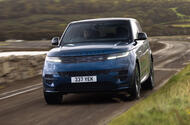
For the past decade, the Range Rover Sport has been the model that best shows what the Range Rover brand can do. It can carry the full-size car's luxury, handle like a sharp road SUV, and still climb terrain that most cars would never attempt. Now it has an electric version, the Sport Electric EV550, which looks identical to the combustion car and sits on the same MLA platform as the rest of the family.
Under the skin, the EV uses an electric motor on each axle, producing 542bhp and 627lb ft of torque from a 118.5kWh usable battery. Those figures match the full-size Range Rover Electric. The battery sits in the floor, which lowers the centre of gravity without cutting into interior space or changing the driving position. The Sport is the stiffest car yet built on the MLA, and it has a rear-biased feel on the road. The result is a car that rides, steers and handles better than the petrol version it replaces, with the drivetrain supporting the experience rather than dominating it.
The two Range Rover electrics were developed side by side with the Jaguar Type 01 GT, and the Sport feels distinctly different from its bigger sibling. It channels the character of the previous-generation Sport, which is a welcome surprise given how many EVs feel generic.
Not everything has improved. The touchscreen remains mediocre in both its display and its usability, and Terrain Response is buried in it when a physical dial would be far easier to reach. Dynamic mode stiffens the car too much, so the standard setting is the better choice for everyday driving. That is the opposite of what we found on the Range Rover Electric. The synthetic electric noise piped into the cabin in Dynamic mode also feels gimmicky.
Pricing starts at £109,745, which is roughly £20,000 more than the equivalent mild hybrid and £15,000 more than the plug-in hybrid. It is about £10,000 less than the V8 petrol, which the EV also outperforms on the road. Performance is brisk, with 0 to 62mph taking 4.5 seconds and a top speed of 124mph. Claimed WLTP range is 375 miles. Rivals include the BMW iX5 and the Porsche Cayenne Electric.
Our verdict is that this is a very successful transformation. Most drivers will forget it is electric until it is time to plug it in.
Reporting based on an external source.