 Carinsider
Public EV Chargers Could Soon Match Home Tariffs
EV Charging·October 29, 2026
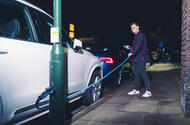
Drivers who cannot charge at home could soon pay something much closer to household electricity rates at slower public chargers. The Department for Transport is setting up a taskforce to test ways of letting drivers use their domestic energy tariff at the local, lower-powered public points that make up roughly a third of the UK network. Ministers describe the plan as an end to the "driveway divide," the gap between drivers who can plug in overnight and those who must rely on the street.
In the meantime, the Treasury has committed £100 million to bring prices at those chargers closer to home rates for two years, starting in spring 2027. Officials estimate the change will save a typical driver around £150 a year, based on a car covering 8,000 miles at 3.3 miles per kWh. It is not yet clear how the money will reach drivers, but it is aimed at slower AC units. Fast DC rapid chargers are excluded.
The move follows an independent report commissioned by the DfT's Office for Zero Emission Vehicles and published on 28 October. Its authors called "porting" home tariffs to slow chargers the best long-term answer to what they described as an inequity. The price gap they point to is wide. Zapmap's latest data puts the average AC public charger at 54p per kWh, roughly double the 26p flat rate in Ofgem's price cap and about eight times the 7p off-peak rates some suppliers offer. On the report's example car, a driver relying on public points would pay around 16p per mile, compared with between 2p and 8p at home.
Government has tried to address the problem before, though not comprehensively. Drivers without off-street parking can apply for a grant of up to £500 towards a home charger, but they must fit a solution that stops cables crossing the pavement, and the charger does not guarantee use of the adjacent parking space. Last week the DfT also removed the need for planning permission to install pavement-crossing gullies, a change it says can save drivers up to £300.
Simon Lightwood, the buses and local transport minister, put the case in plain terms. "If you don't have a driveway, you shouldn't be stung for charging your car," he said. He pointed to sales up 36% on last year and to 200,000 drivers who have already used the Electric Car Grant. Whether the taskforce's pilots produce a tariff that works for drivers without a driveway will depend on details the government has yet to publish.
Reporting based on an external source.