 Carinsider
Paris Motor Show 2026: Nostalgia Up Front, China Everywhere Else
Motor Shows·October 18, 2026
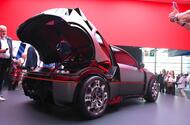
Paris has always been Europe's showcase for new metal, and this year's motor show leaned heavily on the past. Citroën brought back the 2CV as a cheap electric car priced at around £13,000, and designed to fit the proposed "E-car" rules for affordable, European-built EVs. It was the headline act, but it was far from the only throwback. Fiat unveiled the Multiplay and Multiplina, each referencing a different past Multipla. Peugeot dressed its new 208 in bodywork inspired by the Group B T16 rally car and brought back the RCZ as a 2+2. Renault filled its stand with reinterpreted 4s, 5s and Twingos, plus an 8 Gordini concept, while Alpine showed a sports car concept drawing on the 1970s A310.
The nostalgia was impossible to miss, but the bigger story was the number of Chinese brands on show. They were present in all four halls and dominated two of them. Machines like the Leapmotor B03, a direct rival to the Renault 5, the seven-seat BYD Atto 8 and the Omoda 4, which is priced under £25,000, showed how credible these brands have become. The open question is whether buyers will be able to tell them apart from their rivals, and whether any of them will earn the kind of design affection that gets revived decades later.
European manufacturers have leaned on heritage to stand out, but they are also closing the gap on technology. Renault Group boss François Provost said the company is "not afraid of anyone" when it comes to tech. The more pressing battle, though, is over policy. Volkswagen, Renault and Stellantis all lobbied for rules that let them build cars in Europe and sell them at a profit. Those measures include the E-car framework, changes to the EU's planned 2035 ban on non-zero-emission car sales, the UK's zero-emission vehicle mandate, and a proposed Industrial Accelerator Act that could reward locally made models. The irony is that Chinese firms stand to benefit from the same rules, and many are rushing to localise production in Europe. Xpeng's stand made the point bluntly with a sign reading "in Europe, for Europe."
At a Sunday evening event before the show opened, French industry minister delegate Sébastien Martin argued that European carmakers need protection from rivals whose products are backed by state subsidies. He said tariffs were working, claiming that Chinese brands now account for 11% of vehicles sold in France since import tariffs were introduced, down from 40% previously. He also said the measures should extend to hybrids.
Paris made one thing clear: Chinese brands are no longer curiosities at a European show, and their sales figures are still climbing. European firms are playing to their strengths, combining heritage with increasingly competitive technology. The fight for European buyers is only getting started.
Reporting based on an external source.