 Carinsider
Noble M500 Goes Analogue: A Stripped-Back V6 Built for Drivers Who Want Control
Reviews·November 1, 2026
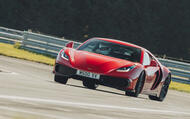
The most telling way to describe the Noble M500 is to list what it leaves out. There is no electronic stability control, no torque vectoring, no airbags, no anti-lock brakes, no automatic gearbox and no driver assistance systems of any kind. Even the seatbelt reminder chime has been dropped. Noble's view is that a driver who can handle 413bhp per tonne in a car with a wheelbase barely longer than a Volkswagen Polo has earned the right to make their own decisions.
The M500 is the successor to the M600 of 2009, a carbon-bodied car that became a cult favourite thanks to its McLaren F1-rivalling pace and a price that climbed to £200,000 at the time. The new car is different in several ways. It uses a glassfibre body and a smaller turbocharged V6 in place of the M600's larger engine, and it is priced at £180,000 before options. Boss Peter Boutwood argues that the appeal now lies in rarity, personalisation and a pure, unfiltered driving experience rather than sheer outright speed or exotic materials.
That philosophy is a familiar one at Noble. The company, still operating from a small unit in Leicestershire and building very low numbers, has consistently pursued the same goal since the M10 of 1999. Every car it has made has been aimed at drivers who want to be involved in the act of driving, with the car responding to their inputs rather than correcting them.
The challenge for the M500 is the competition. Established manufacturers can offer cars with more electronic polish, better refinement and more familiar service networks for less money. Whether the Noble's rawness is enough to win over buyers who could spend their money elsewhere is the central question. For buyers who value a manual gearbox, a clear mechanical link to the road and a car that trusts its owner to get things right, the M500 makes a clear and deliberate case for itself.
Reporting based on an external source.