 Carinsider
London's Robotaxis Face a Safety Test and a Traffic Question
Autonomous Driving·October 22, 2026
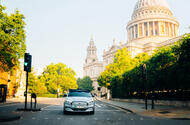
Uber's self-driving taxis have been carrying passengers in London since September, and the debate over whether they belong on the capital's streets has moved from theory to practice. Fifteen electric Ford Mustang Mach-Es, running on AI software from UK company Wayve, operate under permission from Transport for London. Riders book through the Uber app, but a supervising driver sits in every car and can take over when needed. That requirement stays in place until the government and the DVLA approve driverless operation.
Opinion among experts is divided. Kevin Vincent, director of Coventry University's Centre for Connected and Autonomous Automotive Research, says the technology is ready and that regulation is the main obstacle left. He points to around 1,600 road deaths a year in the UK and argues that human error is behind most crashes, so self-driving vehicles should eventually make roads safer and less congested. On liability, he notes that the Automated and Electric Vehicles Act 2018 puts responsibility on the operator or manufacturer, not the passenger.
The safety record is more mixed than that pitch suggests. US figures generally show robotaxis involved in fewer crashes than human drivers, but much of that data comes from the companies running the services. A study from the University of Central Florida found the vehicles were five times more likely to be involved in a crash at dawn or dusk, and twice as likely when turning. Vincent also points out that Waymo's entire US fleet is still less than a tenth the size of New York's yellow cab fleet, so the technology has not yet been tested at the same scale as human drivers.
London has already produced its own warning signs. One rider said a car treated a vehicle parked in the middle of Whitehall as the back of a queue and stopped, and the supervising driver had to take over and steer around it. Vincent argues that the software can learn from moments like these. Adam Tranter, the former West Midlands cycling and walking commissioner, is far less convinced. He argues London does not need more cars, noting that average occupancy is about 1.2 people and that robotaxis may sit empty for up to half their time. He also suggests operators could eventually push for tougher rules on pedestrians, such as limits on jaywalking, to make life easier for the software.
Wayve rejected that idea. The company said jaywalking is common in London and that its AI Drive system has been prepared for it through real-world experience and simulation, which it says reduces accidents. It expects shared rides and smarter routing to make its fleet more efficient over time.
Reporting based on an external source.