 Carinsider
Ice Cream Vans Go Electric, and Go Quiet
Commercial EVs·November 8, 2026
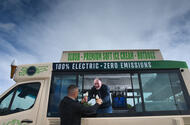
Whitby Morrison has been converting ice cream vans since 1962, and it has now built its first fully certified electric model. The Crewe firm is still family-run and turns out around 80 conversions a year, most of them on Mercedes Sprinter chassis cabs for UK operators. A typical build takes about eight weeks, but customers usually wait a year for delivery, so the business is busy.
The electric van grew out of a question the family kept coming back to. Stuart Whitby, the managing director, once owned a BMW i3, and when electric delivery vans started appearing on British roads about five years ago, the company began considering an electric conversion. Range and payload were not good enough at first. What changed things was Mercedes launching the eSprinter, which initially came only as a panel van. Whitby Morrison ordered its first couple of eSprinter 414 chassis cabs with an 81kWh battery and completed its first conversion a few months later. Staff also had to be trained and certified to work with high-voltage systems. One lesson stood out early: the electric chassis cannot be welded, so everything must be bonded.
The company demonstrator is an eMondial Lusso, priced at roughly £200,000 before VAT. Its plain cream paint is deliberate, since it is destined for a London customer who trades at upmarket locations where a traditional bright van would look out of place. The van has a gross weight of 4,250kg yet can be driven on a standard car licence. Whitby Morrison quotes a real-world range of 180 miles and says it has seen 200 in testing. A 22kW charger takes the battery from 20 to 80 percent in a little over two hours, which can happen overnight, while a 110kW rapid charger does the same job in 26 minutes.
Cost and demand remain the open questions. So far the company has received only a handful of orders for its electric vans. One sale has gone to Hocking's Dairy Cream Ices, a long-established operator in Devon, where winding lanes and summer tourism make long, unpredictable shifts the norm. Whitby expects more buyers to switch as their current vans reach the end of their lives, and as councils and event organisers look more kindly on quieter, zero-emission traders.
For operators who are not ready to go fully electric, the company's ePower system offers a middle path. It uses three lithium-ion batteries with a combined capacity of 15kWh to run the fridges, freezers and Carpigiani soft-serve machine, so the diesel engine can be switched off. That makes it possible to trade in parks, at festivals or even indoors at exhibitions. Around 70 percent of new diesel vans from the firm now carry the system.
Exports have shrunk to about 5 percent of the business, which Whitby puts down to Brexit making overseas buyers less keen on British products. Asked what a van could earn, he suggested a good pitch could take £60,000 in six months. That is the company's own estimate, and it is a figure every prospective buyer should test against their own trading patch.
Reporting based on an external source.