 Carinsider
Horse's B20 Engine Is Built to Keep Running Underwater
Engines·November 3, 2026
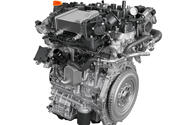
Most engineers spend their time keeping water out of the combustion chamber. Horse Powertrain has taken the opposite approach with the B20, a 2.0-litre inline four that it says can run while submerged to depths of up to 1.1 metres. The company announced the unit in early September, pitching it at hybrid vehicles and at off-road driving where wading is part of the job. It can also hold continuous output on extreme off-road gradients, including climbs of 100%. Depending on how it is set up, the engine produces 189 to 280bhp and 221 to 280lb ft.
The danger is simple physics. Liquids do not compress, so a fine mist that vaporises in the intake does no harm. A large volume of water drawn into a cylinder on the compression stroke is another matter, because the piston cannot complete its travel. That is hydraulic lock, and it can wreck an engine in a single event. Serious off-roaders have long managed the risk with snorkels that pull air from above the waterline. A snorkel does nothing for the electrics and sensors, though, and those also need protecting when a vehicle sits in a river.
To deal with that, the B20 is designed to meet IPX8, one of the higher levels of the Ingress Protection standard. The structure is fully sealed, with dedicated sealing between the engine and transmission, and the electrical components and sensors carry the same rating. A sensor detects when the engine is submerged, and the control system then responds by limiting power or changing throttle response.
The efficiency work is just as notable. Horse runs the engine on the Miller cycle and says 48% of the fuel energy it burns is converted into mechanical work. High-pressure direct injection and high-tumble intake ports help the air and fuel mix thoroughly and burn cleanly. The pistons are shaped to create a squish effect: a flat band around the crown edge nearly meets a matching surface in the cylinder head at top dead centre. That forces the mixture back toward the middle of the chamber and stirs up turbulence, which speeds up combustion.
Under the skin, the B20 has a rigid gantry-style aluminium block with the exhaust manifold built in, plus a simplified balancer shaft system to improve refinement. A variable-displacement oil pump works only as hard as it needs to, cutting the energy spent circulating oil and helping fuel economy.
These are the manufacturer's claims, and they will need proof in real mud and deep water before anyone can judge them. Still, an engine that is sealed from end to end and tells its own controller when it is underwater is a sensible answer to a problem that has mostly been handled with workarounds until now.
Reporting based on an external source.