 Carinsider
Honda Builds Road Charging That Powers EVs While They Drive
EV Charging·October 21, 2026
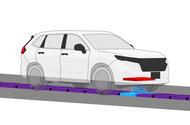
Honda has outlined the technology behind its plan to charge electric vehicles while they are moving, a idea that many carmakers and researchers have chased for years. The system, which Honda calls dynamic wireless power transfer, is meant to cut the number of stops that trucks and other vehicles need to make at charging stations. Honda has been working on on-the-move charging since 2021, and this month it announced the core technology it is developing.
The work is split between two partners. Taisei, the Japanese civil engineering and construction group, is developing the methods for embedding wireless transmitters into road surfaces, along with roadside DC power supply units. Honda's research and development division is building the matching receivers and transmitters. Honda says the combination should allow high-power transfer and simple installation, and that it should work for a wide range of vehicles, up to commercial trucks.
The setup has three main parts. A DC power supply sits beside the road. A ground assembly links several transmitter units buried in the pavement through a DC electrical network. A receiver installed in the vehicle picks up the energy. The units in the road have to survive the constant loading of trucks weighing up to 20 tonnes fully laden, and they must still deliver high power to vehicles travelling at higher speeds.
Honda is starting with logistics and transport fleets, even though the technology is intended for all EVs. That choice makes sense for the business case. Delivery vehicles run long, predictable routes, and each avoided charging stop saves time. Honda ties the project to its broader push for convenience, including Honda Charge, its EV charging network in Japan. Being able to top up power on the road could also reduce the number of visits to public chargers and the reliance on overnight home charging.
Experiments begin this year on a test section at Taisei's Future Technology Field in Satte. The trials are designed to check whether the charging hardware, the pavement structures and the road construction methods all work together. They will also look at how well the system can be upgraded on existing roads, how road maintenance would be handled, and how to control electromagnetic field leakage. Performance will be verified at output levels of up to 150kW.
The next major step is the Tateyama Project, a demonstration led by the operator of the Tateyama Expressway in Chiba, with Honda and Taisei both taking part. It is scheduled to start in 2027. Until then, the hardware is still in the testing phase, and questions about cost, durability and safety remain open. The Chiba demonstration will be the first real test of whether roads can charge vehicles at highway speeds on a practical basis.
Reporting based on an external source.