 Carinsider
EVs Wear Through Tyres Faster, but the Climate Case Holds
Electric Cars·November 6, 2026
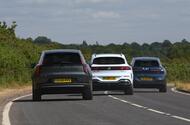
Electric cars are developing a reputation problem at the tyre shop. New figures suggest EVs fail tyre checks more often than petrol cars, and the causes go beyond the obvious point that they carry heavy battery packs. Analyst New Automotive found that among cars aged three to eight years, about 26 EVs per 1,000 MOT tests had tread below the legal limit, against 18 petrol cars. Cuts reaching the cords turned up in roughly 30 EV tests per 1,000, compared with 14 for petrol. The comparison covered 1.6 million EV tests and 17.9 million tests on combustion cars.
Weight is the first suspect. Nick Molden, founder of Emissions Analytics, offers a rough rule of thumb: every per cent of extra mass brings about a per cent more tyre abrasion. Since EVs are typically around 20 per cent heavier than their petrol or diesel equivalents, he estimates roughly 20 per cent more wear before any specialist tyres go on. The British Tyre Manufacturers Association reports a similar pattern, with a failure rate of 6.0 per cent for EVs against 4.7 per cent for diesels and 4.3 per cent for petrol. It blames the extra mass together with instant torque, which can chew through rubber every time a driver pulls away sharply.
Owner habits matter too. Darren Lindsey, who heads the BTMA, says people tend to drive and forget, and that because EVs need less routine servicing, there are fewer garage visits where a worn tyre might be spotted. He also cautions that the defect numbers are not a clean measure of wear. A flagged tyre might have a sidewall cut or a small bulge rather than a shallow tread. Jon Andersson, an emissions specialist at Ricardo, ranks mass as probably the biggest factor, with speed, braking, alignment, tyre design and driving style also playing a part.
Specialist EV tyres can claw back much of that lost life, but they are not cheap. Molden says they are generally up to 50 per cent more expensive than ordinary tyres. He warns that the real damage happens when heavy, high-torque cars run on rubber that is not built for them, and that the wrong tyre can double wear rates.
Faster wear does not automatically mean more pollution. Andersson points out that a tyre wearing out quicker does not necessarily shed proportionally more airborne particles. The harder question is what the next generation of tyres will be made of. Euro 7 abrasion limits will push manufacturers toward longer-lasting compounds, and Molden notes that new formulations will change the toxicity of the particles they release. Prashant Kumar, an air pollution researcher at the University of Surrey, says the long-term health effects of the metals and chemicals in tyre dust are poorly understood, and that the finest particles can become airborne. The BTMA responded that any change to materials or product design goes through extensive technical evaluation.
On the sustainability side, Molden cites around two billion end-of-life tyres discarded worldwide each year. He concedes that making more tyres adds emissions, but says it would not cancel out an EV's lifecycle CO2 advantage, which he puts at roughly 50 per cent. Tyres, in his view, last about two years on average, and no amount of faster wear is going to outweigh the gain from electrification.
Manufacturers are already working on the problem. Continental has developed a compound for Volkswagen's Mission Efficiency streamliner with rolling resistance about 25 per cent below what an A rating requires under the EU label, and the work will feed into its next EV compounds. Citroen's 2CV project takes a different route, using digital twin technology to track load, temperature and pressure, then adjusting stability control when grip falls.
Reporting based on an external source.