 Carinsider
Europe's Hands-Free Driving Push Is Coming, Whether Buyers Ask for It or Not
Autonomous Driving·November 16, 2026
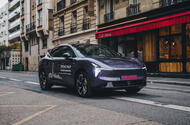
Few car buyers walk into a showroom asking for L2++. The label describes the highest tier of supervised driving, where the car handles navigation and the driver stays legally responsible as the backup. Renault Group's head of development, Philippe Brunet, conceded the point at the Paris motor show: nobody is going to choose a car because of that badge. The technology is arriving in Europe anyway, and the main reason is China.
Chinese manufacturers are moving fast. Xpeng showed off its Navigation Guided Pilot steering an SUV through the clutter of Paris traffic. Li Auto used the same show to announce its European launch with the electric i6, which carries four lidar sensors and displayed a detailed map of nearby obstacles on its dashboard screen. Aito told Autocar that 40% of the miles its cars covered in China in September were hands-free, though China does not allow fully hands-free operation, so drivers still nudge the wheel now and then. Brunet expects the feature to become standard within two years, because Chinese brands will bundle it for free.
Tesla pioneered the category in the West with its Full Self-Driving software, a name critics said overpromised. European rules kept it out until an intensive lobbying effort persuaded Dutch authorities to approve it. Eight EU countries have now allowed it. To satisfy European law, Tesla renamed the product Tesla Assisted Driving.
Regulators are also softening toward end-to-end AI, the learn-from-data approach used by Tesla and several Chinese firms. It produces a smoother drive, but it is harder for officials to verify that the system will behave the same way every time in a safety-critical moment. European carmakers are adopting it anyway, often through London-based Wayve. Stellantis has signed up, with the first Wayve-backed L2++ cars due in 2028, starting in the United States.
Premium brands will reach Europe first. Mercedes-Benz and BMW tried to sell an eyes-off, hands-off level-three system on motorways, but it was expensive and limited enough that both pulled back. Mercedes now plans to roll out L2++ across Europe by the end of the year. BMW intends to add navigation-guided city driving to models such as the iX3 and iX4 from 2027. Both companies argue their approach feels less jarring than rivals'. BMW's "symbiotic drive" avoids forcing a handover, so a driver can brake manually without resetting auto-follow. Mercedes' "cooperative steering" works on a similar principle, and its CEO, Ola Källenius, said the system registers when a driver intervenes.
Cost and reliability remain the hurdles. Sensors, chips and software all add to the sticker price. Qualcomm's Anshuman Saxena warned that buyers will not pay for a feature that fails half the time. Because the driver keeps ultimate control, carmakers can test demand for more autonomy without taking on full liability or paying for costly backup systems. Brunet admitted Europe long assumed its older buyers and narrow streets made these features unnecessary. After watching large cars maneuver through tight spaces in China, he said that argument no longer holds.
Reporting based on an external source.