 Carinsider
Depressing yet exciting: the Brits who drove the Soviet Union
Motoring History·November 5, 2026
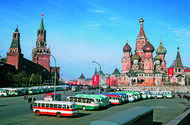
The popular picture of the Cold War is two worlds sealed off from each other, with the Iron Curtain as an unbreachable wall. The reality was messier. Communist states did allow Western tourists in, and some of them were British drivers who brought their own cars.
The Soviet state travel agency Intourist, formed in 1929, began offering motor tours in 1935. Having already run Arctic cruises and opened a London office, it sold packages that included three meals a day, guided visits to Moscow, Novgorod and Leningrad (now St Petersburg), interpreters, secure car storage and the Soviet visa. The price was the modern equivalent of about £2,130. The Second World War ended the scheme, and it was not revived until 1957.
Reviving it was a bold move. Relations were tense. The Suez crisis had seen the USSR threaten to use nuclear weapons against Britain, and the Hungarian uprising had been crushed the year before. Even so, several thousand Britons expressed interest. Autocar reassured its readers in 1957 that a road journey through the USSR "may be undertaken without apprehension."
The first tour was taken by two officials from the RAC, who reported that they had covered 4,315 miles in 15 days after getting through a long run of paperwork and questioning at the border. They found the Brest-to-Moscow highway a rough imitation of a German autobahn, fast enough to hold high speeds but with an uneven surface that demanded attention. Whenever they stopped, locals gathered round the car with questions. The practical problems were harder to shrug off: fuel stations were scarce, the petrol was low octane, the trip took weeks away from work, and unfavourable exchange rates pushed the cost to £5,410.
Still, a few thousand Britons made the trip in 1958, and the drives kept going. A motorist touring in 1963 with his wife and children in a Riley 1.5 complained about inedible food, poor signposting, lorries that hogged the lane, and the risk of arrest for using the wrong roads or photographing the wrong things. A writer in 1973 learned that driving at night was a serious mistake, since many Soviet drivers ran without headlights and got angry at anyone whose lights were on.
Those who persevered tended to come away with mixed feelings. The 1973 writer summed up the experience as "depressing yet nevertheless exciting." He praised Moscow's Kremlin, St Basil's, and the enormous GUM department store, and he found the people friendly and curious about his Ford Transit, even as Intourist grew more disorganised the farther they travelled. Intourist always seemed to know where they were supposed to be, however.
A final visit in 1979 came on the way home from Sweden in a new Saab 900 Turbo. The only Russians who seemed interested in the car were the border guards, and the rough roads were, as the writer put it, ideal for testing a fast, rugged car's handling and ride.
One of the few who went as a child was Terry Dudleston, who travelled to Moscow with his parents in a Jaguar Mk VIII in 1960. He remembers dusty tracks where they averaged 10 to 20 mph, and low-octane petrol that made the engine pink even with the ignition retarded. He recalls guides and interpreters who were friendly, though the food, mostly borscht, was dreadful, and shadowy men in dark coats who were probably KGB keeping watch. The Jaguar drew a crowd wherever it stopped. At twelve, he says, he did not grasp how big the whole four-week adventure was.
Few people today realise that Westerners could drive into the USSR during the Cold War. Perhaps that is because few of them wanted to.
Reporting based on an external source.