 Carinsider
Beijing Warns London Against Following the EU on Chinese EV Tariffs
Trade Policy·October 24, 2026
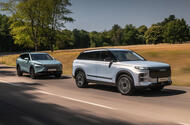
China has warned that it will retaliate if the UK restricts imports of Chinese electric cars, adding pressure to a decision London has yet to make. The timing is awkward for ministers. The EU has reportedly told Britain it must impose its own tariffs or see British-built cars excluded from the bloc's proposed "Made in Europe" preferences, part of the Industrial Accelerator Act, which is designed to shield local factories from cheap Chinese competition.
A Chinese Ministry of Commerce spokesperson urged Britain to respect World Trade Organisation rules and to think carefully before copying Brussels. "If the UK insists on imposing restrictions on Chinese electric vehicles, China will resolutely retaliate," the spokesperson said. Business secretary Jonathan Reynolds, speaking to a parliamentary committee, said the tariff question remains "under close review" and that he was willing to keep talking with European counterparts about shared problems. He also said Britain has to weigh its long history as an exporter against the demands of its home market.
That home market has changed quickly. Chinese brands took a 23 percent share in September, according to the SMMT trade body. BYD finished as the second-best-selling brand that month and MG fourth, while the Jaecoo 7 was once again the country's top-selling car. Sales of the established players are moving in different directions. Nissan's UK sales are down 15 percent this year and Toyota's are down 1.8 percent, while Mini is up 25 percent and JLR is up 3.6 percent.
The Industrial Accelerator Act would give British-built cars access to state EV incentives, electric corporate fleet targets and government purchasing, and Nissan, JLR, the SMMT and the government have all argued that the UK should be inside that tent. The catch is that joining could mean copying the EU's countervailing duties of up to 45 percent on China-built EVs. The bloc has also agreed quotas with China on hybrid and plug-in cars, and London would probably be expected to follow. Reynolds noted that no UK carmaker has filed a complaint with the Trade Remedies Authority, the usual route for challenging dumped imports.
Rules of origin add another layer. From January, cars moving between the UK and EU must contain at least 55 percent UK or EU parts under the post-Brexit trade deal, which rules out a simple assembly plant that bolts together Chinese kits. Reynolds argued that a Nissan-style operation built around Chinese components would not qualify. Nissan is in talks with Chery about using part of its underused Sunderland plant, and the analyst Matthias Schmidt told Autocar that Chery needs a European production base and may be waiting to see whether London reaches a deal with Brussels.
Chinese carmakers are pushing back. MG's commercial director, Guy Pigounakis, said he struggled to see how tariffs would benefit UK consumers and warned they would raise prices. He also pointed out that Chinese brands are already excluded from the Electric Car Grant, which cuts up to £3,750 from the price of EVs built in Europe and elsewhere. "Applying a tariff on top of that seems draconian," he said. BYD and Chery did not comment. Mercedes-Benz CEO Ola Källenius has made a similar argument at a wider level, warning that EU protectionism builds resilience but pushes costs up.
For now, the UK is weighing two risks: angering Beijing and pricing buyers out of EVs, or letting cheap imports reshape its car industry without a defence. Whatever ministers decide, the outcome will show how far Britain is willing to follow Brussels on China policy.
Reporting based on an external source.