 Carinsider
Autumn Budget Leaves Plug-in Company Car Drivers Facing Steep Tax Rises
Company Cars·October 29, 2026
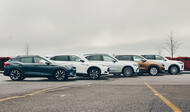
Plug-in hybrids and electric cars are set to become much more expensive to run as company cars, and fleet specialists say the Autumn Budget did little to soften the blow. The most useful item for businesses was a timetable for benefit-in-kind (BIK) tax rates in the 2030/31 tax year. Drivers already ordering cars now will still be running them in April 2030, so the industry had been pressing for clarity. BIK is the tax charged on the private use of a company car. It is added to the driver's pay and taxed at their income tax rate, usually 20% or 40%.
Every BIK band rises by one percentage point in April 2030, but electric cars face the steepest climb. Their rate goes from 4% in 2026/27 to 10% in 2030/31. For a 20% taxpayer in a Volkswagen ID.3 79kWh Style, the monthly bill is forecast to rise from £27 to £67.
Plug-in hybrids fare worse. The 2024 Budget placed every model emitting between 1 and 50g/km of CO2 into a single 18% band, which removed the incentive for those offering longer electric range. The Volkswagen Golf eHybrid, with an 88-mile electric range, moves from 7% today to 20% in 2030/31. That takes a 20% taxpayer's monthly bill from £44 to £133.
Dave Bushnell, director of consultancy and strategy at Fleet Operations, welcomed the move as a step toward restoring confidence but said the government could have gone further. He pointed out that drivers are still taxed on a car's original list price, even after it has lost much of its value. Changing that, he argued, would have made electric cars more accessible through salary sacrifice schemes and would have supported used prices.
Capital allowances, which let businesses deduct vehicle spending from profits before corporation tax, also change. Firms can write off 100% of the cost of EVs, 14% for cars in the 1-50g/km band and 6% for anything above that. The main rate fell from 18% to 14% in April 2026 and drops to 12% in April 2027, which reduces the tax break on hybrids in that bracket. Leased cars are unaffected, and businesses can still offset the full rental cost of vehicles emitting 50g/km or less.
Employees who drive their own cars for work will see a rise. HMRC's approved mileage rate covers fuel, depreciation and running costs. The first 10,000 miles will be paid at 55p a mile, a temporary June increase that becomes permanent. Miles beyond that rise from 25p to 35p. These are the first changes in 15 years, and the Treasury expects them to benefit around three million workers.
Jon Lawes, managing director of Novuna Vehicle Solutions, said manufacturers are facing fierce global competition and falling residual values. The priority, he said, should be a transition that buyers can afford and businesses can plan for, with more certainty on EV taxation, charging costs and future sales targets.
Reporting based on an external source.